

By Sarah Marchese - FASRC Research Data Manager - July 8, 2026 The RSpace Support Group pilot project was launched in July 2025 to assess awareness, use, and support of RSpace, an FAS-supported electronic lab notebook (ELN) available to Harvard researchers. Representatives from Harvard Library, University Research Computing (URC), the Office of the Vice Provost for Research (OVPR), and FAS…
News
FASRC Collaboration With Starfish
FASRC has worked closely with Starfish to create a system allowing not only accurate storage cost recovery, but to allow researchers and PIs an insight into their storage usage and tools for managing that storage.:th You can read more in a two-part blog series from Starfish: Chapter One: How Harvard Faculty of Arts and Science Research Computing and Starfish built…
FASRC Adds New H200 Partition to Cannon
Over the past several years FASRC has seen remarkable growth in GPU demand. The gpu partition has been regularly oversubscribed with near constant 100% utilization. Looking at future trends, GPU computation will only become more popular. With this in mind, FASRC is pleased to announce the new gpu_h200 partition on Cannon. This partition is made up for following: 24 Lenovo…
2025 Compute OS Upgrade
It is time for our annual operating system (OS) upgrade for our two clusters, Cannon and FASSE. Unlike previous years we have separated the upgrade from our annual power outage. This was to make it easier for FASRC staff to deal with any unforeseen issues coming out of the power outage and to simplify the power on process. In addition…
2024 FASRC User Survey Summary:
Out of 2000+ active users on the cluster, 195 users participated in this survey. The survey covered demographics, cluster use, storage, support, training and documentation. If you would like to provide additional feedback, please use the following link: User Survey Comments User Demographics: The distribution of respondents was: Graduate Students (30%) Research Staff (16%) Faculty and PIs (19%) Postdocs (15%)…
Social Capital – The strength of our relationships and communities
In a new paper published in Nature, Raj Chetty's group unearths insights into social capital and how it shapes our nation and our people, both socially and economically. Visit The Social Capital Atlas: https://www.socialcapital.org/ Read the paper: Nature 608, pages108–121 (2022) Read the Harvard Gazette story: How Childhood Friendships Sway Economic Mobility
Sex chromosome transformation and the origin of a male-specific X chromosome in the creeping vole
Matthew B. Couger, Scott W. Roy, Noelle Anderson, Landen Gozashti, Stacy Pirro, Lindsay S. Millward, Michelle Kim, Duncan Kilburn, Kelvin J. Liu, Todd M. Wilson, Clinton W. Epps, Laurie Dizney, Luis A. Ruedas, Polly Campbell Mystery solved? Chromosomal sex determination arises when an autosomal locus acquires a sex-determining function. In some taxa, this process occurs often. The XY system in…

Event Horizon Telescope Maps Emissions From Black Hole
The Event Horizon Telescope Collaboration has published results showing how the project was able to map and create imagery of polarized emissions from material rotating within the magnetic field near the event horizon of the supermassive black hole in galaxy M87. Scientists from Harvard's Center for Astrophysics and Black Hole Initiative used the FASRC cluster for several parts of this projects'…
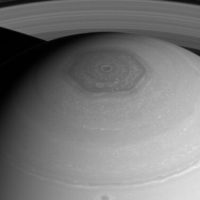
Deep rotating convection generates the polar hexagon on Saturn
Rakesh K. Yadav Jeremy Bloxham PNAS June 23, 2020 117 "The hexagonal flow pattern on Saturn is a striking example of turbulent self-organization. However, the mechanism of its formation and its depth remain unclear. There are two hypotheses: in one, the hexagon is shallow, extending to depths ranging from tens to hundreds of kilometers; in the other, it extends to thousands…

The Milky Way’s giant, wave-like collection of gas
Astronomers at Harvard University have discovered a monolithic, wave-shaped gaseous structure - the largest ever seen in our galaxy - made up of interconnected stellar nurseries. Dubbed the “Radcliffe Wave” in honor of the collaboration’s home base, the Radcliffe Institute for Advanced Study, the discovery transforms a 150-year-old vision of nearby stellar nurseries as an expanding ring into one featuring…
You must be logged in to post a comment.