
Increasingly, big data is changing life’s game board. As technology evolves and becomes further integrated into society, massive amounts of data are being collected and stored. From the app on your cellphone to the swipe of your credit card to the systems that monitor everyday activities, data is endlessly transmitted and interpreted. With supercomputers within easy reach and storage infinitely…
News
Explosion of Research Data Drives “Tipping Point” for IT Facilities
James Cuff, Assistant Dean for Research Computing, sits down with Data Center Knowledge to discuss his upcoming keynote address at the 2015 Data Center World Global Conference. Cuff will talk about the current and future state of the data center in his address. “Data centers are the back bone of civilization,” Cuff said. “Basic science is being done through computing." For…
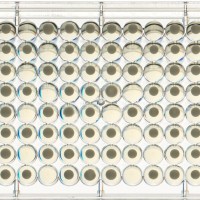
Evolution in Action: Observing Yeast Over 500 Generations
What does evolution look like? How much does genetic background influence evolution? Is evolutionary adaptability random or predictable? These are questions the Desai Lab has set out to answer. With a research focus on evolutionary dynamics, the Desai Lab observes evolution in action. To do this, the lab has designed experiments that allow them to quickly detect certain types of rare mutations,…
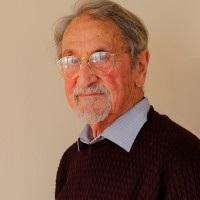
Research Computing Among Sponsors for Martin Karplus Celebration Symposium
Harvard FAS Research Computing (FASRC) has partnered with Dell to sponsor part of the Martin Karplus Celebration Symposium on October 1, 2014. The Symposium is a one-day event celebrating the life and work of Martin Karplus, the Theodore William Richards Professor of Chemistry Emeritus at Harvard University. Karplus was one of three winners of the 2013 Nobel Prize in chemistry…
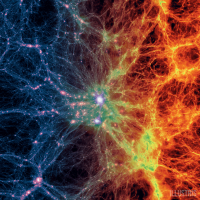
Simulations run on Odyssey lead to first realistic virtual universe
Astronomers have created the first realistic virtual universe by running large-scale cosmological simulations on supercomputers. The project, known as Illustris, was led by Mark Vogelsberger of MIT and the Harvard-Smithsonian Center for Astrophysics. Illustris produced detailed galaxy simulations by using complex computer models that captured the physical components and processes of the universe from 12 million years after the Big…
Research Computing partner in Massachusetts Open Cloud project
HOLYOKE – Friday, April 25, 2014 – Governor Deval Patrick today announced a $3 million capital investment to launch the Massachusetts Open Cloud project, a university-industry collaboration designed to create a new public cloud computing infrastructure to spur big data innovation. Governor Patrick also announced the release of the 2014 Mass Big Data Report, which confirms the continued growth and…

Research Computing Announces Internet2 HPC Advisory Group Membership
DENVER—April 7, 2014—Internet2 today announced at the 2014 Internet2 Global Summit the creation of the Internet2 Program Advisory Group for High Performance and Research Computing and the inaugural co-chairs and members. "I'm excited to lead this important venture along with my colleague and friend Dave Lifka," said Jim Bottum, the Group’s Co-Chair and Clemson University’s Chief Information Officer. "As high speed…
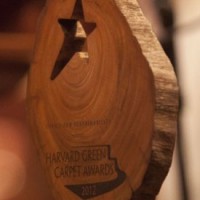
MGHPCC project team wins Harvard Green Carpet Award
The Harvard Office for Sustainability has awarded the Harvard project team for the Massachusetts Green High Performance Computing Center (MGHPCC) a Green Carpet Award. The award recognizes Sustainability Leaders at Harvard who exemplify innovation and creativity through the development and execution of campus sustainability plans that focus on the reduction of energy use, green house gas emissions, waste, and…
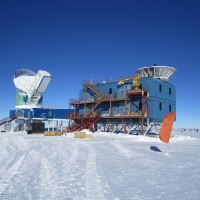
Research Computing powers computation behind BICEP2 discovery
Research Computing has provided computational support and infrastructure for the BICEP2 project. Research Computing provided the BICEP2 project with 400TB of storage space and access to more than 30,000 cores of compute.Research Computing also provided virtual machine support for BICEP2 websites and data. The project consumed 5.1 million CPU hours on Odyssey since 2010. Of those 5.1 million CPU hours,…
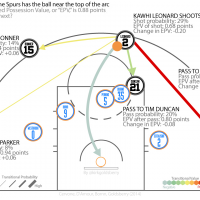
NBA drafts Big Data
Harvard researchers have used Odyssey to dig deep into NBA player data, creating a new statistical framework for basketball analytics. The research, led by Kirk Goldsberry, Visiting Scholar at the Center for Geographic Analysis, Luke Bornn, Assistant Professor in the Department of Statistics, Dan Cervone, and Alex D’Amour both PhD students in the Department of Statistics, uses player data from…
You must be logged in to post a comment.